
Maximum WordPress customers don’t understand how a long way the block editor has come. Core blocks like Duvet, Team, Columns, and Symbol now come with sufficient integrated design controls to create layered intensity, cinematic scroll results, daring typography, and polished layouts that in the past required customized CSS or web page developers.
As an example, with not anything greater than a Duvet block and a couple of design toggles, you’ll construct a full-screen hero phase with a fixed-background picture, focused textual content, and a scrolling intensity impact that appears love it got here from a top rate theme.
This information makes a speciality of the ones forms of “magic results,” appearing you the way to mix WordPress’s local format gear to create high-impact visuals whilst maintaining your web site light-weight and rapid.
Contents
The upside of staying local
Whilst you construct the use of core blocks, quite than piling on dozens of additional plugins or depending on a heavyweight web page builder, you get a number of distinct benefits:
- Fewer plugins approach fewer replace complications and a smaller assault floor for safety.
- Higher functionality is conceivable as a result of local blocks are optimized for the editor and the front-end, and internet hosting platforms like Kinsta can cache and serve them successfully.
- You’re future-proofing. Since WordPress core evolves and helps blocks natively, you’re much less reliant on a selected third-party plugin staying up-to-the-minute.
- It additionally leads to cleaner markup. Core blocks most often output streamlined HTML/CSS (quite than bloated builder wrappers), which is helping with load instances, accessibility, and search engine optimization.
All of that is to mention that when you’ve been considering, “I wish to set up a separate fancy plugin or web page builder to get animations, parallax or hero sections,” it’s time to assume in a different way. Leveraging the design options constructed into the core editor (assume format controls, gradients, duotone filters, block types, and patterns), you’ll create high-end effects whilst maintaining your web site lean and maintainable.
Within the subsequent phase, we center of attention on considered one of your most dear design gear: the Duvet block. We additionally display how you’ll use it as a basis for layered, “magic” visible results.
The Duvet block is an untapped useful resource
Whilst you’re aiming for that “magic” for your format, the sort that feels top rate and polished, the Duvet block is considered one of your most powerful gear. It combines full-width visuals, textual content overlays, and versatile positioning in one container, all constructed natively into WordPress.
The Duvet block allows you to set a background picture, video, or a cast colour, after which drop different blocks inside of it. As a substitute of simply a picture, you get a layered phase: background media, overlay, and content material. That layering is what provides you with intensity and visible passion.

As an example, you’ll use it as a hero banner, a big CTA phase, or perhaps a full-screen background for a storytelling phase.
The right way to use it for intensity and to simulate a parallax impact
One of the vital compelling tips is layering a couple of Duvet blocks or the use of their integrated settings to simulate parallax or intensity.
To try this, insert a Duvet block, set the background, then cross into its sidebar settings and allow Mounted background. This makes the background keep in position whilst the foreground content material scrolls.

Use the “Toggle complete top” choice so the Duvet block occupies the total viewport, which is excellent for hero sections.

When you stack a number of Duvet blocks one after some other (every complete viewport top), you’ll create a sequence of immersive sections the place every one visually “hits” as you scroll.
And from there, you’ll proceed to layer. Within the Duvet block, you could position a Team block that holds a heading, paragraph, and button. On the other hand, you could recolor the overlay to make sure your textual content sticks out. The use of the point of interest picker is another choice to ensure cellular audience nonetheless see the “proper” a part of the picture.
A couple of Duvet block pointers
Experimenting with the Duvet block is an effective way to increase what’s conceivable in your site. Listed here are a couple of tricks to make much more of this useful gizmo:
- Within the block toolbar, the alignment settings (broad, complete width, left/middle/proper) and content material place (best/middle/backside) permit you to keep an eye on how your content material sits over the background.
- Within the sidebar, media settings like Mounted background and Repeated background are to be had. When Mounted background is off, the Focal Level Picker is helping you upload emphasis in your designs.
- Overlay isn’t to be underestimated, both. To stay your textual content readable over a picture, both a semi-transparent colour overlay or duotone filter out will assist.
Use scroll snap to construct cinematic results
Scroll snap isn’t a local environment within the block editor, however you’ll reach it with a tiny quantity of CSS implemented throughout the Types panel or the Further CSS space for your theme. This helps to keep the whole lot light-weight and nonetheless allows you to construct top rate storytelling results the use of most effective core blocks.
Have you ever ever noticed a internet web page the place every phase clicks completely into position as you scroll, like flipping via a high-end editorial or a sophisticated mag unfold? That impact is incessantly accomplished with a CSS impact referred to as scroll snap, and you’ll mirror it the use of core blocks in WordPress with no need a slider plugin or the rest of the kind.
Scroll snap allows you to outline how the browser must lock (or “snap”) the viewport to specific kid components as a consumer scrolls. With only some CSS homes, maximum significantly scroll-snap-type at the container and scroll-snap-align at the kids, you’ll create a guided, easy scroll revel in.
The right way to allow scroll snap the use of core blocks
In line with Pootlepress educational, right here’s a transparent, step by step workflow you’ll practice within the block editor:
- Use a Team block (or a Duvet/Phase container) because the father or mother container for your whole sections. In its Complicated settings, upload a customized elegance: .scroll-snap-container.
- Now cross to Look > Customise > Further CSS or your block theme Types and follow settings like this:
.scroll-snap-container {
  top: 100vh; /* complete viewport top */
  overflow-y: scroll; /* allow scrolling on that container */
  scroll-snap-type: y obligatory;
}
The y axis approach vertical scroll and obligatory approach the browser will drive a snap to every kid.
- For every kid phase (for instance, a Duvet block throughout the container), both in its Complicated > Further CSS elegance or concentrated on the block variety, follow:
.wp-block-cover {
  scroll-snap-align: get started;
  top: 100vh; /* ensure that every phase fills the viewport */
}
The output looks as if this:
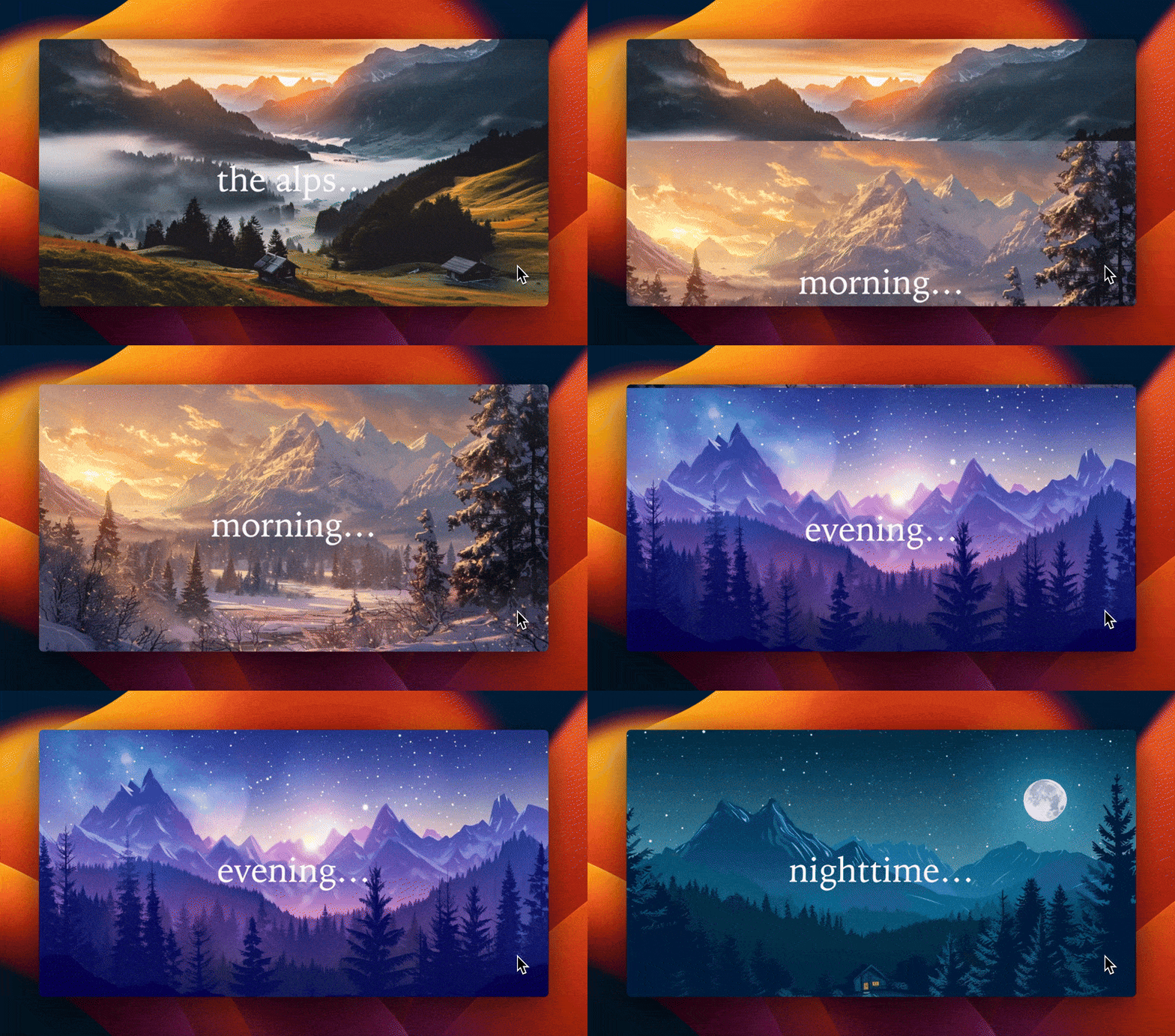
Scroll snap creates a guided, story-like revel in that attracts guests via your content material one phase at a time. As a substitute of without end scrolling, customers transfer intentionally from one “scene” to the following, like turning pages in a virtual mag. This managed waft helps to keep their consideration centered, which is particularly efficient for portfolios, hero sequences, and product touchdown pages the place you need every phase to face out.
And since scroll snap is based fully on local CSS, it delivers that cinematic, high-end impact with out the bloat of JavaScript sliders or heavy animation libraries. The result’s a easy, performance-friendly design that appears subtle but remains rapid and responsive throughout gadgets.
A couple of issues to look ahead to
The scroll snap impact could make a large distinction in how your content material is perceived. However you wish to have to pay cautious consideration to web site functionality and total UX as you enforce it. Right here are some things to notice:
- Ensure that every phase is light-weight: Large background pictures or autoplay movies in every “snap” phase can gradual issues down. Use WebP pictures, compress video, and lazy-load the place conceivable.
- Take a look at cellular scroll functionality: Snapping can really feel awkward or compelled on telephones if no longer tuned, so take a look at totally.
- Layer content material neatly: Since you’re the use of a couple of Duvet or Team blocks set to complete viewport top, it’s simple to create deep visuals, however that intensity must no longer compromise load instances or accessibility.
- Make sure that your internet hosting helps excellent front-end functionality: When every viewport-sized phase has wealthy visuals, load and render pace topic so much.
Font Opposite and inventive typography tips
Typography is likely one of the most straightforward tactics to make a format memorable, and within the block editor, you’ll do it with out including heavy plugins.
A method some designers name “Font Opposite” flips the standard hierarchy: as a substitute of darkish textual content on a gentle background, you set mild textual content over a picture or gradient overlay. This provides a daring, built-in really feel, particularly whilst you mix the Duvet block with Heading and Paragraph blocks.

You’ll take this additional with CSS mix modes. As an example:
.wp-block-heading {
  mix-blend-mode: overlay;
}
That snippet permits the heading to visually merge with the underlying background, growing an impact like a film poster without a exterior font plugin or animation library required. Simply stay distinction and clarity in thoughts.
Making textual content readable with out further overlays
WordPress’s integrated duotone filters be offering a sublime method to spice up legibility: you’ll follow them in your background pictures (and even movies) inside of a Duvet or Symbol block, giving a bit a unified visible tone.
Then mix that with the Duvet block’s overlay controls. Pick out a semi-transparent black, white, or brand-accent colour to sit down between the background and your textual content for max clarity.

Some other visible trick is to use a gradient overlay in the back of the textual content. Within the Duvet block settings, choose Overlay > Gradient, then follow a refined impact (for instance, black at 40% opacity fading to clear) so your picture nonetheless presentations via whilst your headline obviously sticks out.
Those small design touches assist your headings and calls-to-action pop with out cluttering your format or hurting functionality.
Accessibility and design steadiness
Nice typography shouldn’t come at the price of clarity. Stay those tips in thoughts:
- Care for a minimum of a 4.5:1 colour distinction ratio between textual content and background.
- Use heading ranges appropriately (H1, H2, H3) for construction and search engine optimization.
- Steer clear of the use of mix modes for very important textual content on busy pictures and as a substitute imagine fallback colours for darkish mode or high-contrast topics.
When carried out proper, your textual content turns into each artwork and message, which captivates your guests whilst maintaining your web site light-weight, out there, and rapid.
Movement, intensity, and storytelling
Static pages can glance polished, however movement provides your design power. With a couple of ingenious touches throughout the block editor, you’ll introduce refined motion and intensity that make your web site really feel immersive.
The use of the Duvet block for cinematic “hero” sections
When you’ve ever sought after that full-screen, scroll-driven hero impact noticed on company websites or product pages, you’ll get shut the use of most effective the Duvet block.

You’ll use the similar full-height Duvet blocks presented previous to create cinematic hero sections that really feel alive. Pair a placing background picture or video with a focused heading and call-to-action, then experiment with refined movement, such because the Mounted background choice, to offer your web page a way of intensity and motion.
Including animation with customized block types
Core blocks don’t come with animation controls out of the field, however WordPress’s integrated improve for customized CSS categories makes it simple so as to add them. As an example, you’ll create a easy fade-in impact the use of this snippet in Look > Customise > Further CSS:
.fade-in {
  opacity: 0;
  animation: fadeIn 1s ease forwards;
}

@keyframes fadeIn {
  to {
    opacity: 1;
  }
}
Then assign the fade-in elegance in your Duvet, Symbol or Team block. When you want a pre-built resolution, you’ll additionally combine a light-weight library similar to Animate.css whilst nonetheless tracking functionality and trying out throughout gadgets.

Construction multi-layered visible intensity
If you wish to cross additional than a unmarried background, check out layering blocks for added influence. As an example, position a Duvet block as your background picture or video, then inside of it, nest a semi-transparent Team block to carry your textual content and buttons.

Subsequent, optionally position Symbol blocks or different ornamental components above it the use of customized CSS or theme-supported absolute positioning, in case your theme permits.
This means creates a transparent design hierarchy with foreground components that “pop” whilst backgrounds upload context, motion, and intensity. And when you’re operating in a full-site enhancing block theme that helps place controls (presented in WordPress 6.2+), you’ll set a bit (normally by way of a Team block) to “sticky,” so it stays in view whilst different content material scrolls beneath, including a refined storytelling waft throughout your web page.
Numerous businesses and creators now construct immersive, scrolling homepages the use of most effective core blocks.
As an example:
- Tale-based portfolios that mix fixed-background hero pictures with minimum textual content overlays.
- Touchdown pages that transition from one full-screen phase to some other the use of scroll snap (as described previous).
- Product showcases that use cushy fade-ins or slide-up animations induced through scroll.
All of this works fantastically on high-performance internet hosting like Kinsta, the place optimized caching and CDN supply ensure that easy scrolling, even for media-rich sections.
Shifting past the Duvet block
If you’ve mastered the Duvet block, it’s time to assume larger. The true magic occurs whilst you get started combining WordPress’s different core blocks like Team, Columns, Stack, Symbol, and Video to create layouts that really feel deliberately designed, no longer cobbled in combination. Those blocks give you structural keep an eye on and visible flexibility, permitting you to experiment with out depending on exterior design plugins.
With a format in position, you’ll get started making refinements. Listed here are a couple of extra issues you’ll do:
Use gradients, borders, and spacing to create fashionable intensity
Core design gear have advanced dramatically because the early Gutenberg days. Now you’ll fine-tune:
- Gradients: Observe refined linear or radial gradients as phase backgrounds to create visible waft.
- Borders and radius controls: Upload rounded corners or framed results for a cushy, fashionable glance.
- Padding and margin controls: Regulate spacing exactly with out customized CSS.
Those local styling options permit you to produce extremely polished layouts proper throughout the editor.
Observe duotone filters for consistency and tone
When you’re blending a couple of picture or video blocks, duotone filters assist unify the visible tone of your web site. As an example, making use of a heat sepia filter out throughout all visuals could make a combined gallery really feel cohesive. You’ll additionally create model consistency through the use of duotones that echo your colour palette.

Those filters aren’t simply aesthetic; they assist toughen textual content distinction and center of attention consideration the place it issues maximum.
Conclusion
Light-weight components like Duvet, Team, Columns, and Symbol blocks already provide you with a robust basis, however the true key’s balancing design with pace. Use optimized codecs like WebP, compress and shorten background movies, allow lazy loading, restrict over the top block nesting, and depend on patterns or templates to stay pages environment friendly.
At this level, you’ll construct a number of cinematic results with not anything greater than core blocks. The overall element is functionality—as a result of those results shine most effective when pages render easily.
Even essentially the most spectacular results depend at the surroundings powering them, which makes internet hosting a part of your design toolkit. Kinsta is helping deal with easy scrolling and rapid rendering via a mixture of:
- Edge caching, which serves content material from information facilities nearer in your guests.
- HTTP/3 and CDN supply, decreasing latency for image-heavy pages.
- PHP threads and optimized databases, making sure your dynamic content material (like block transitions or animations) executes immediately.
That implies your web site appears and feels rapid even with huge, full-viewport sections and cinematic visuals. Take a look at Kinsta these days.
The put up The right way to create magic results in WordPress with core blocks seemed first on Kinsta®.
WP Hosting